Façade render: the signs it needs renovating
Cracks, blistering, moss, damp patches: how to read the condition of your façade and know whether to act this year or wait.
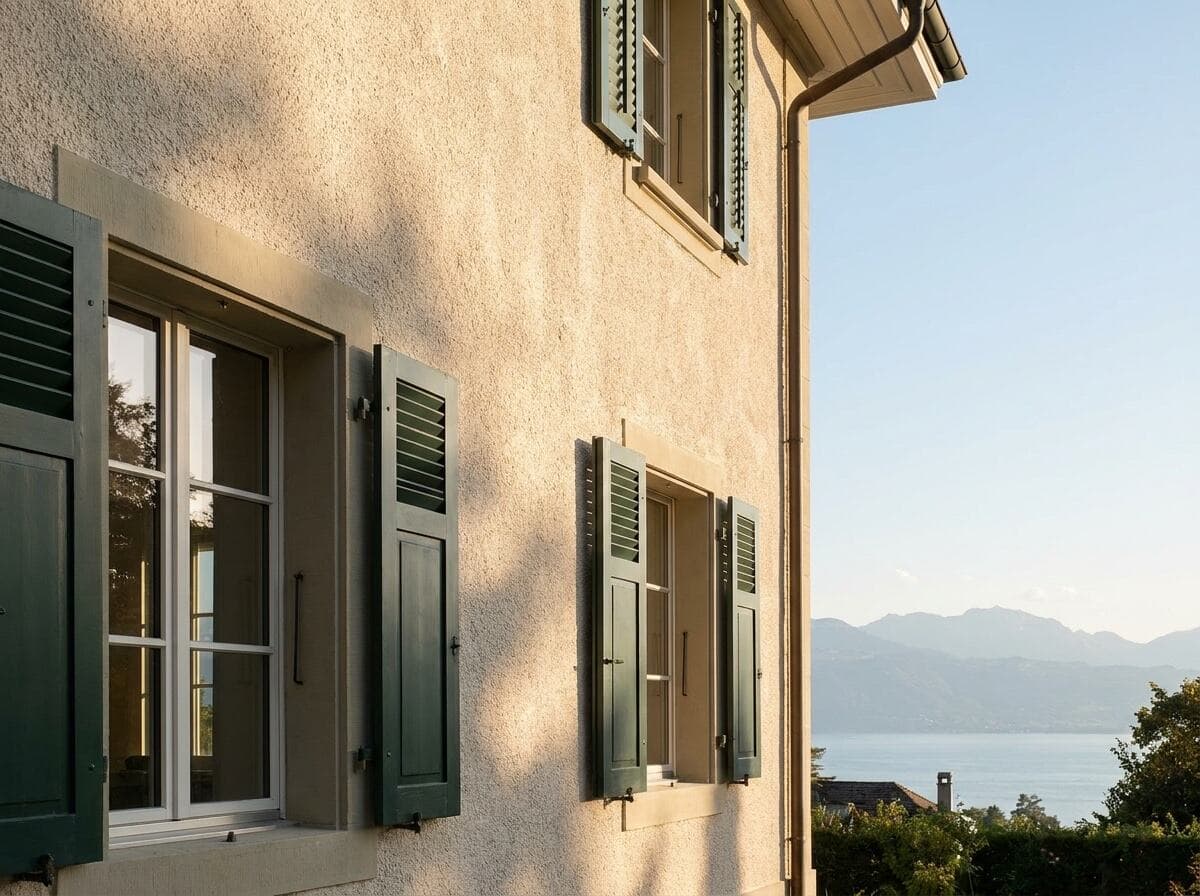
A façade doesn't fail overnight. It sends signals for months, sometimes years — and the cost of the work depends directly on when you notice them.
The five signs to know
1. Fine crazing cracks
Hairline cracks branching across the render, often visible only in raking light. This is normal ageing of the coating. They don't threaten the structure, but they let water in. Urgency: medium — treat within two years.
2. Clean, straight cracks
A straight, regular, sometimes through-going crack following a window corner or a joint. This one doesn't come from the render but from the substrate. Urgency: high — the cause must be diagnosed before covering anything. Painting over it would only hide the problem for a few months.
3. Render that blisters or sounds hollow
Tap the surface: if it sounds hollow, the coating has detached from the substrate. Water is circulating behind it. Urgency: high — the area must be cut back and rebuilt, otherwise it will keep detaching around the edges.
4. Moss and green streaks
Typical of north-facing façades and walls exposed to the Alpine side of the lake. Moss holds moisture permanently against the render and accelerates its wear. Urgency: low to medium — cleaning and treatment are often enough, without redoing the façade.
5. Damp patches that keep coming back
A mark that reappears after every rainfall, often under a windowsill or near a gutter. The problem rarely lies in the render: flashing, a failed joint, a badly designed sill. Urgency: high — fix the source first.
The Swiss climate is unforgiving
The real enemy isn't rain but the freeze-thaw cycle. Water seeping into a hairline crack freezes overnight, expands by 9%, and widens the crack. The next day it thaws, seeps deeper, and starts again. A winter by Lake Geneva counts dozens of these cycles.
That's why a hairline crack ignored for three winters becomes a detachment — and why a façade renovated in time costs considerably less than one repaired too late.
When to act in the year
The right season runs from April to October: the products need temperatures above 5°C and a dry substrate to cure properly. Façades planned in spring are carried out in better conditions — and schedules fill up fast.
What we check during the assessment
We don't guess: we test adhesion, trace the origin of cracks, check the water paths and assess exposure. You then receive a quote that clearly separates what is necessary from what is cosmetic.
Unsure about your façade? Send us a few photos on WhatsApp — we'll tell you honestly whether it can wait.